
From individual field notes to interdisciplinary collaboration │Ethnote
The team behind Ethnote has developed the digital data collection tool they themselves were missing for their field research. But even though there is a lot of praise for the product, it is time-consuming to sell it to large organizations.
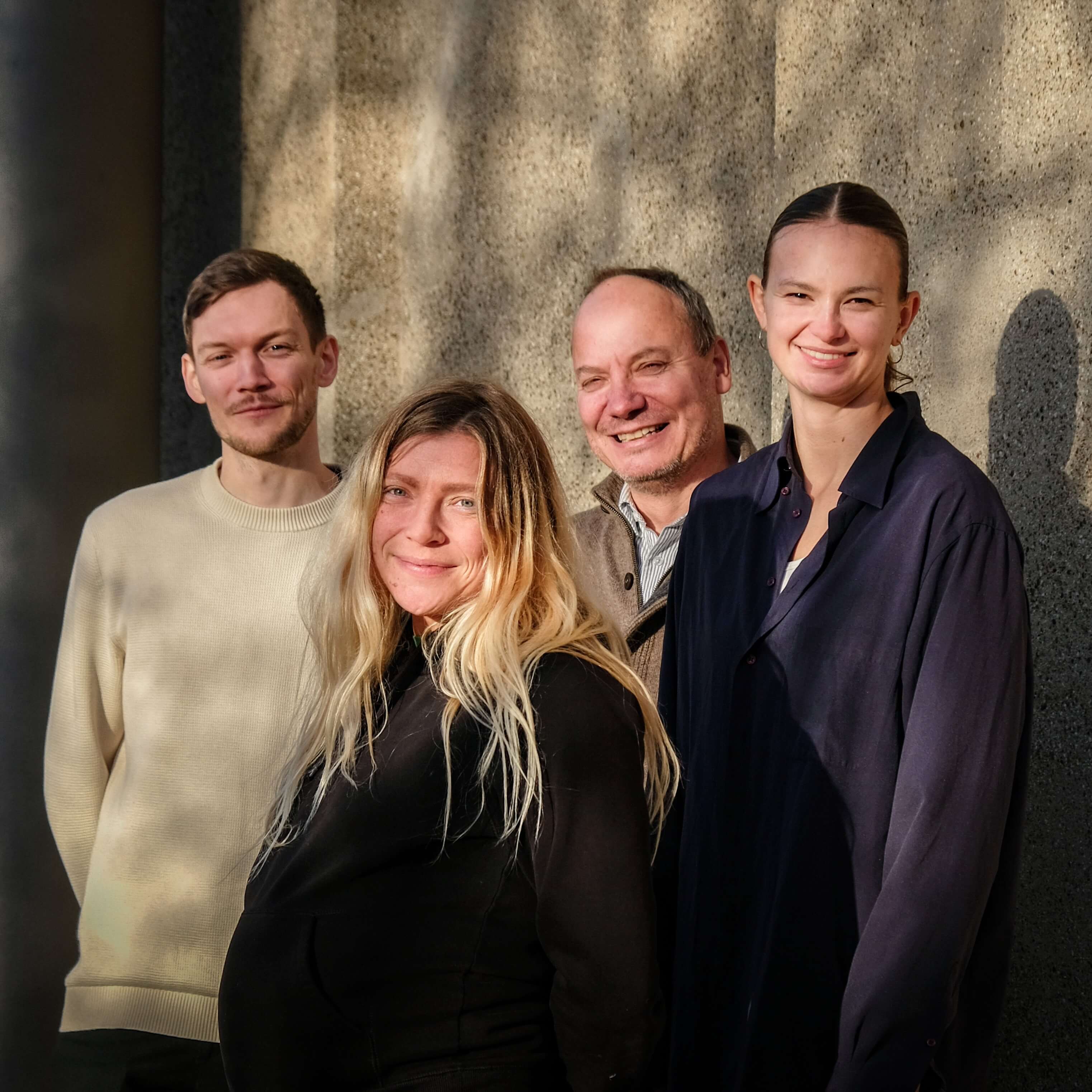
Anyone who has worked with qualitative data knows the challenges of maintaining an overview. Handwritten notes, endlessly long text documents and more or less successful attempts to sort and code. “In my thesis I ended up with a 50-page document with a lot of codes, and maybe it made sense to me, but if I had been in a group with someone, it would have been pointless for them to navigate that document,” says Karoline Husbond Andersen, COO at Ethnote.
These are precisely the challenges that Ethnote wants to solve. “We have prioritized developing an intuitive platform that makes it easy to overview large amounts of data and allows you to design your data collection as you want. A structure is created from the start, so it is easy to collaborate and keep others updated. One of our users called it ‘Excel for qualitative data,’ says CEO Emilie Munch Gregersen, “and that is actually very apt.” Ethnote can be used both via phone and computer and because it is a browser-based app, it works across Windows and Mac.
Another key aspect is data security. Ethnote is independent of foreign services and has recently changed servers so that all data is now stored in Denmark. The tool also meets all standards in terms of GDPR, AI and information security. All of which are incredibly important if research data is to be shared across actors or institutions.
Field notes at Folkemødet
It was an interdisciplinary research collaboration that gave CSO Morten Axel Pedersen the idea for Ethnote back in 2021. At the time, he was the head of the DISTRACT research project on political awareness. As part of the project, he and a group of researchers went to Folkemødet on Bornholm to observe panel debates. Emilie took part in the project as a research assistant and talks about how it started: “Traditional field notes are individual and difficult to collect into datasets. So, we redesigned the field note process and created a survey. When you were out observing, you filled in the survey instead of taking out your notebook. That way we got a uniform structure for the field notes. That was the first step towards Ethnote.”
“From there we worked on. We were also going to Folkemødet the following year, so we tried to make an app. It didn’t work that well,” says Emilie with a laugh. But with funding from the Carlsberg Foundation, it was possible to get Nikolaj Bech Andersen involved in the project. He is a software developer and is currently the company’s CTO. The team later received support from the Innovation Fund Denmark’s Innoexplorer programme and UCPH’s Proof of Concept Fund, which was the starting point for developing AI-powered tools and starting to investigate the commercial potential.

A great privilege
Emilie and Karoline agree that it has been a great privilege to develop Ethnote in a university context. “We have been able to go into depth with the concept development of the platform. The product has been thoroughly tested, and we have presented it a million times – we know that it works,” says Emilie. Karoline nods and adds: “It is a smoother transition, and you can try out different things before anything is binding. Now our situation is different and we have a thousand things to think about: We need insurance, we need a bank – there are all sorts of things around that need to be taken care of. So, the fact that we were able to focus on the platform and the difference that we want to make for a while, has been really nice.”
“We have used KU Lighthouse a lot. I was in the KU Innovators programme and have followed a number of MasterClass events,” says Emilie. “Yes, and then we have the opportunity to hold meetings and work in KU Lighthouse, which is a big help,” adds Karoline. Emilie follows up: “It’s cool to feel the startup energy in the house. The very first day I was in the house was with Signe, our intern. When we sat down for lunch, people immediately noticed that we were new and started asking questions. We have also had a permanent innovation advisor who has followed and helped us since 2023. It has been nice to know: If we are in doubt about something, we have some resources to draw on in KU Lighthouse.”
The rusty mill
“One of our biggest challenges, as a tiny startup, is dealing with an obvious customer group: Research groups at universities and other large public and private organizations. We must navigate bureaucratic processes around contracts and information security and it takes a long time. It is frustrating to sit with researchers who are eager to use our product – a product that is, by the way, 100% GDPR and AIA [EU’s AI Act, ed.] compliant. But they can't get permission until it's been through the whole mill,” explains Emilie.
Morten, who has just entered the door, interjects: “And the mill is just… Big and heavy. Yes, not only that, it's also rusty in some public organizations. Some cogs have fallen off.” The sentences evoke laughter, but you also feel the seriousness behind the words. Morten continues: “If Denmark is a place where the public sector wants to have a greater degree of digital sovereignty and be less dependent on American tech companies, then we can feel firsthand how difficult it is. Because we are a sovereign, digital company that wants to replace some American products, but there are heavy bureaucratic processes that make it very difficult.”
First spin-out from the Faculty of Social Sciences
Ethnote has just signed a license agreement. This makes them the first spin-out at UCPH from the Faculty of Social Sciences. Initially, the team is continuing the process of going from users to paying customers alongside their work at and outside UCPH. “We have focused on creating a sustainably work culture since the start,” says Karoline. “Because none of us are interested in 80-hour workweeks. But we see a future for our tool – we have made something that people are happy with and can see themselves in. So now we are trying to see if we can get it going. The mission is to make qualitative research more accessible to other disciplines.”
Topics
Contact
E-mail: contact@ethnote.dk
Website: https://ethnote.dk/