
From clinic to classroom: Dental care and innovation
Why is it important that future dental hygienists learn to work innovatively? We talked to Ulla Kortegaard Bendtsen about this. Ulla was trained as a dentist in 1986 and has taught at the School of Dental Hygienists and Clinic Assistants (SKT) for the past 15 years. She is responsible for the course Dental Care for Citizens with Special Needs.
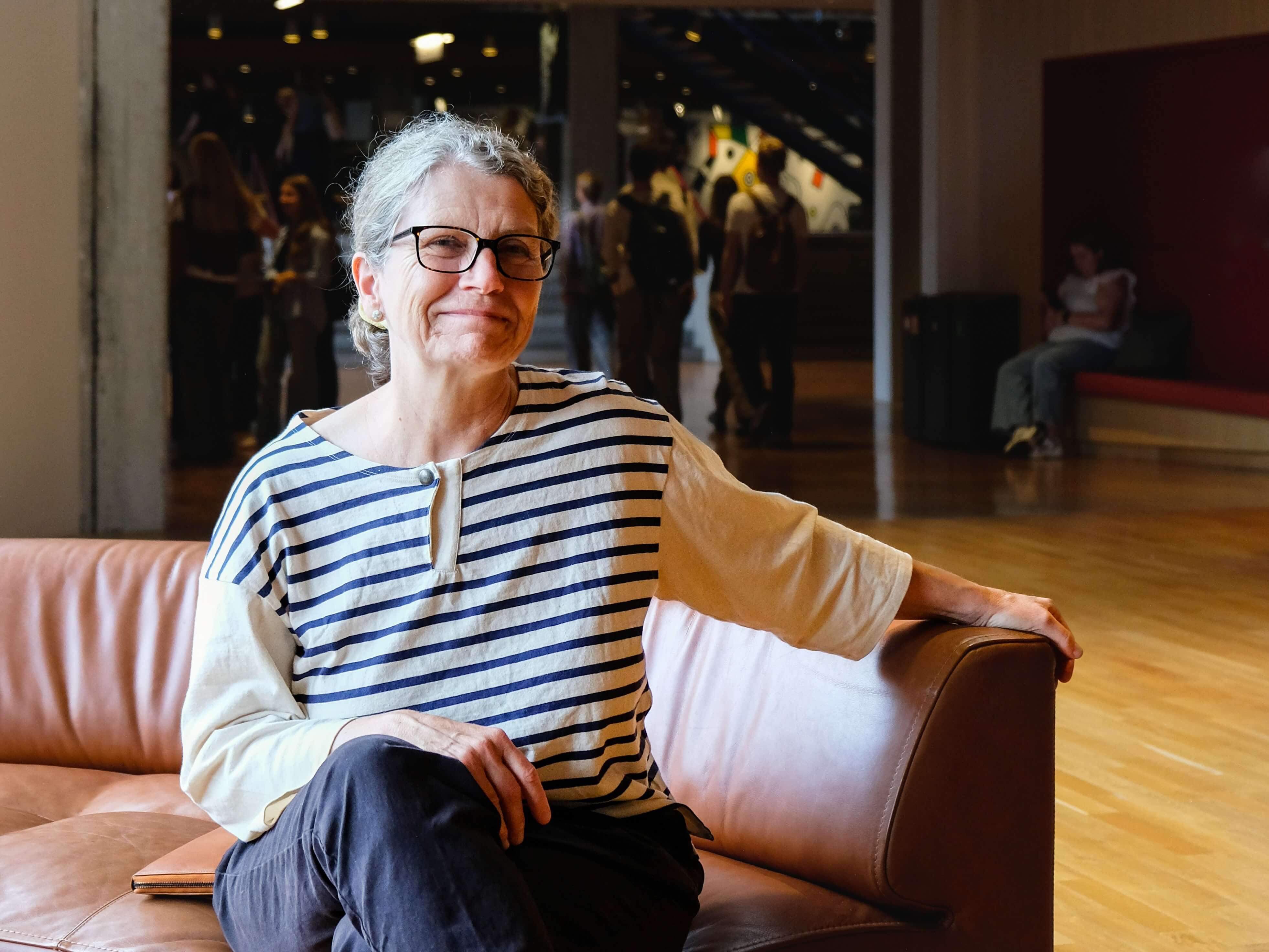
“The course Dental Care for Citizens with Special Needs is about the elderly, about people with disabilities and about patients who have been hospitalized for a long time. These are groups where oral health is often very poor and has been for many years. It is a huge problem that we cannot just expect nursing staff to solve, and that is why we must think smarter,” says Ulla.
Internship and problem solving
At SKT, students are sent on internships in nursing homes, residential facilities and hospitals, where they become part of interdisciplinary teams with the nursing staff. “For the students, it’s an eye-opener. Many are shocked by how bad things are. They return with a great commitment to making a difference,” says Ulla.
That’s why innovation has become a permanent part of the course. After the internship period, there is a whole week where the students use their experiences from the internship as a starting point to develop solutions. First, they get an introduction to innovation methods, then they choose a problem to work on developing solutions for, and finally they pitch their solutions to a panel of professionals.
Innovation makes a difference
Innovation makes a clear difference because the students no longer only work from theory but take their starting point from the challenges they themselves have encountered. According to Ulla, this means that their own experiences and ideas are given space in a way that differs significantly from classic teaching. She experiences that many of the students grow enormously during the innovation week.
At the same time, they learn to present their proposals to a professional panel with representatives from municipal dental care and other professionals. For the students, it is not just an exercise, but a real opportunity to have their ideas heard by people who can take them further.
Collaboration with KU Lighthouse
For Ulla, KU Lighthouse has played a crucial role in making the innovation part work. She remembers how they initially tried to run the process themselves but quickly discovered that it was difficult to control both the process and the pace. When the collaboration with KU Lighthouse came into place, everything fell into place.
She is particularly impressed by how quickly the innovation consultants got to grips with the specific issues and structured the process and adapted the methods. According to Ulla, the collaboration improves the teaching quality because Lighthouse ensures an overview and adds a commitment and energy that rubs off on both teachers and students.
At the same time, the collaboration means that teachers can focus more on the students' academic needs. Ulla finds it a relief to be able to support her students along the way, while KU Lighthouse keeps track of methods, time and processes.
An investment in the future
For Ulla, the collaboration is not just about creating a good course here and now. She also sees it as an investment in the students' future. When they later become employed in public dentistry, they encounter a reality with scarce resources and major challenges. Here they can draw directly on the tools they have learned in the innovation week.
The same applies to hospitals, where dental hygienists are increasingly becoming part of interdisciplinary teams. Doctors have opened their eyes to the fact that oral health plays an important role in healing and treating diseases. Therefore, there is a need for dental hygienists who can contribute with new ways of organizing efforts. Here, she sees innovation as a central tool.
You just have to throw yourself into it
Innovation makes sense because it is based on real-world challenges. This is precisely what maintains the students' commitment. Ulla's advice to other teachers is therefore simple: Don't be afraid to start working with innovation. Experience shows that you get better along the way, and the gains are great.
Topics
Contact
Ulla Kortegaard Bendtsen: ukb@sund.ku.dk