
Everything is cringe until it works │Søster til Søster
Caroline Løvenstein Vegeberg Buus and Oskar Buus run the popular information platform and webshop Søster til Søster. In this article they share some of the detours and challenges that have led them to where they are today. Both Oskar and Caroline have done a project-oriented course with KU Lighthouse. Caroline is a trained anthropologist, and Oskar is currently pursuing his master's degree in theology.

Starting point and detours
Søster til Søster was created from a desire to work with equality and gender and draw on the knowledge Caroline has acquired in her anthropology studies. And it was also a shared dream to create an economically viable company. But what form and focus such a project should have was not clear from the beginning, and Oskar and Caroline have worked with several ideas before Søster til Søster was created.
"Our first idea was about selling wine to women," says Oskar. “My family has a wine shop and at some point we became aware that it is primarily men who buy wine and that knowledge about wine is connected to cultural capital.” Caroline adds: “We wanted to talk about that difference and give women a space to nerd out about wine. And in that way work with equality.” She continues: “We didn’t get that far at the time. But today we regularly host wine tastings in Søster til Søster. That idea actually dates back to that time. It was also at that time we created an Instagram profile, which after a few months was renamed Søster til Søster and today forms the core of our awareness project.”
“When we started using KU Lighthouse, we thought we would work with an idea called ‘Support Poster’,” Oskar continues. “With this idea we wanted to help associations that support gender equality raise funds by making and selling merchandise. We applied for a Micro Grant from the Danish Entrepreneurship Foundation, but we did not receive support, and we got the impression that they were quite critical of the idea. But we did create a website that has since become the webshop that is today part of Søster til Søster.”
Information about gender and gender equality
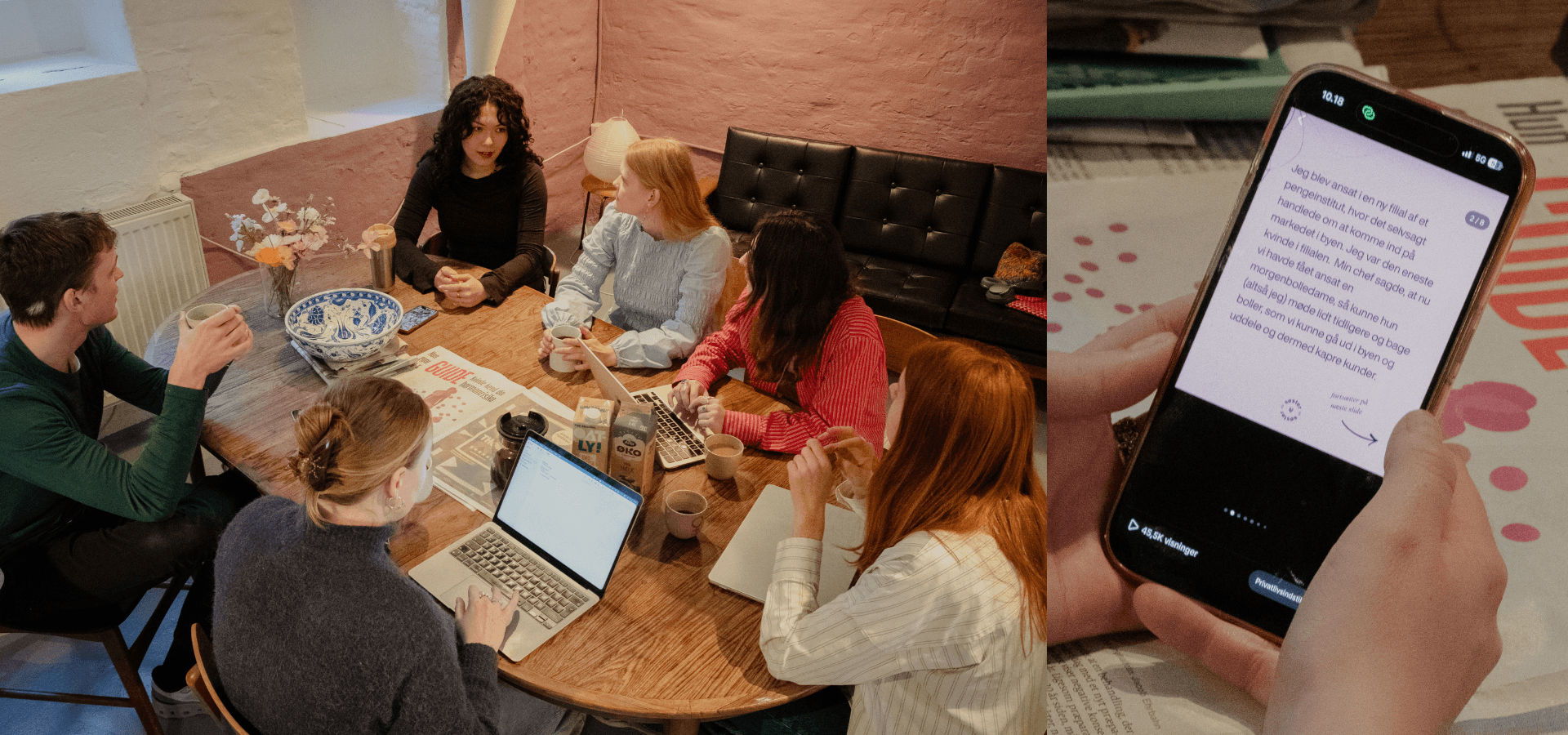
The development of Søster til Søster took speed when Caroline and Oskar began using their Instagram account to create content about gender and gender equality. It turned out that a lot of people wanted to follow along and today the account has +82k followers. “Søster til Søster disseminates research and news about gender and equality where people already interact, to get the research out of the universities,” says Caroline. “And then we try to create a community around testimonies and micro feminist actions. We spend a lot of time on user involvement, so it becomes everyone’s platform.”
At the same time, equality becomes an entry point to talk about topics that many people find difficult to understand on their own. “Equality becomes the key to getting people to want to talk about topics like the EU. You take a little equality and mix it with the EU – the most boring thing in the whole world – and then it becomes exciting,” Oskar explains.
Director-intern
Søster til Søster became part of KU Lighthouse in connection with Caroline's project-oriented course in the spring of 2025. "All of us interns met once a week and then we had KU Innovators on Wednesdays, where Oskar also participated. During this semester we sparred with the other startups and were introduced to KU Lighthouse. And then... Then we actually just found our home here," says Caroline. Since then, Oskar has also done a project-oriented course as part of his master's degree in theology. "I'm still studying. Although I keep forgetting." "We call him the director-intern," adds Caroline with a laugh.
Caroline and Oskar admit that they were nervous that KU Lighthouse would be elitist. “But it’s not,” says Oskar and continues, “we would like to recommend KU Lighthouse. Absolutely. It has been crucial for us. We thought that we could just work from home. Fuck, I got tired of that. We had set up an office in the bedroom and it wasn’t good or healthy to sit with the computer there. In general, we are positively surprised that there is so much focus on how to be an entrepreneur in a way that you can keep doing it in the long run.”
Everything is cringe until it works
Several times in the conversation, Caroline and Oskar say that they do not see themselves as entrepreneurs in the traditional sense. In a way, this seems understandable. Because the content and form of their company do not quite fit into the media’s image of startups and entrepreneurs. This has meant that there have not been many people to look up to. And that meeting the traditional entrepreneurial system has caused some scratches. “The corporate language has been difficult. That Lion’s Den world, I don’t think we fit well into that,” Caroline says thoughtfully.
But at the same time, it makes no sense at all. Because Oskar and Caroline are in many ways the epitome of what entrepreneurship is all about: They are inventive, curious and persistent. And they have had the courage to make a lot of mistakes, learn from them and change direction when their ideas have not worked out as intended. Now they are well on their way to cracking the difficult nut that is combining information and business. Søster til Søster has grown into a team and they have recently moved into their own premises.
“I sometimes think of some of the embarrassing things I’ve done just when I’m about to fall asleep,” says Oskar and makes a startled sound. “I really have done lots of embarrassing things with Søster til Søster. For example, the video I edited when we applied for a Micro Grant. It was a pretty tough rejection we got. So, I've started saying that everything is cringe until it works. Wow, I've felt cringe many times. But it's probably that drive that has gotten us where we are today. 'Well, that didn't work, we made fools out of ourselves, let's do something else'.”
Funded awareness
Clearly the couple’s drive is largely driven by a desire to make a difference. A desire to contribute to a more equal world. That is why Caroline and Oskar have given a lot of thought to the importance of having their awareness work financed. Because they have seen many other equality actors break their necks while the good messages die. “If you have to be activists all the way through, it is difficult to keep the movement going. So, it is important for us that there is someone who finances the agenda. Partly for our survival. Partly for the survival of the agenda. Because if you look at something like the manosphere, it is eerily well financed,” says Oskar.
The income for the awareness work comes from project and foundation funds and individual collaborations with private companies. Søster til Søster has received support from EU Awareness and the Danish Women's Building Fund on several occasions. In addition, as mentioned, the business is also based on a webshop and live events. The support for the awareness work fluctuates because these are time-limited projects. That is why it is also a long-term dream to get media support.
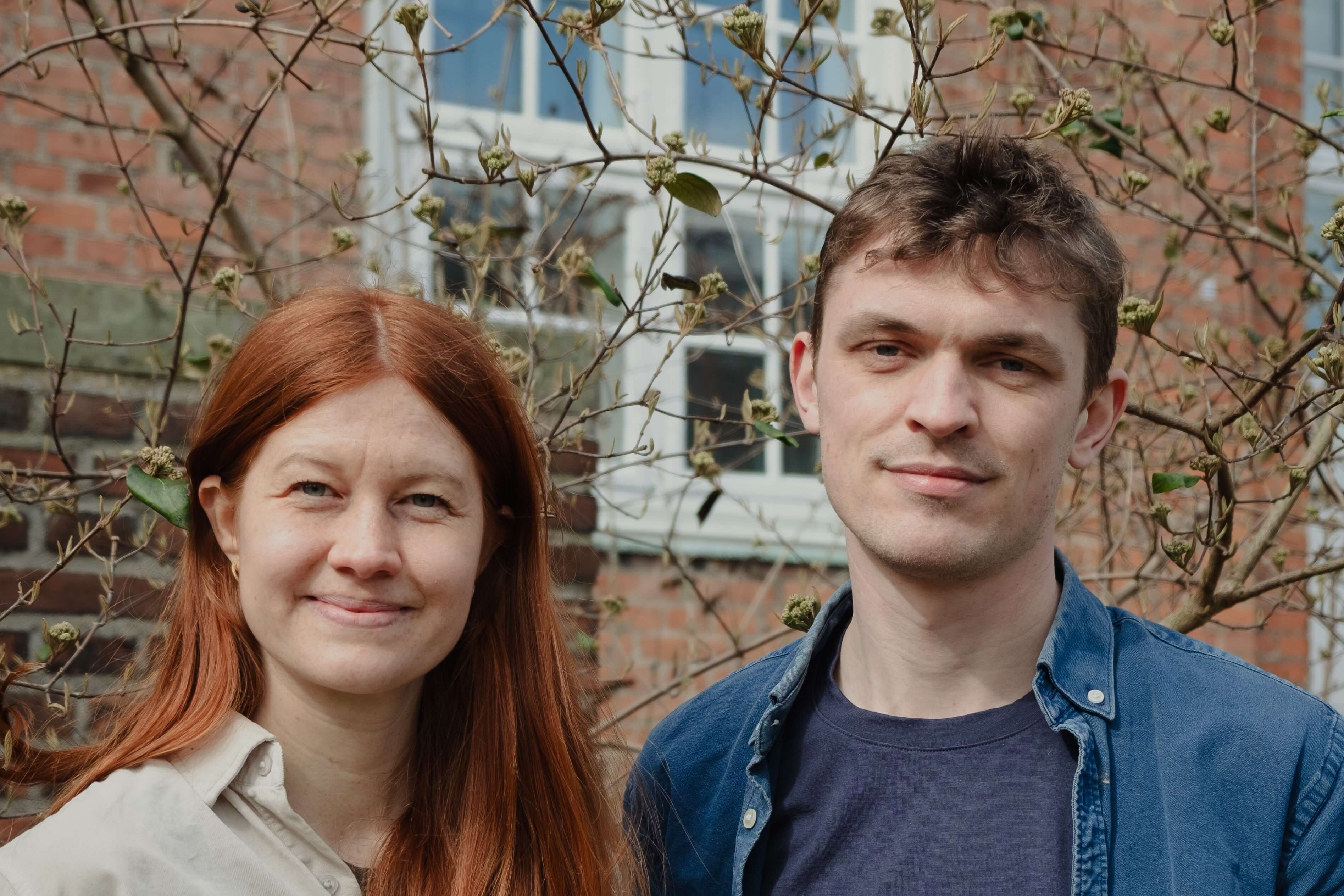
Caroline and Oskar are a couple both privately and professionally. This means that it can be challenging to take time off from the business. But conversely, the couple agrees that it is a gift that they can support each other. Photo: Maria Shubhra Ovesen, KU Lighthouse.
The long run
Caroline and Oskar are proud of how far they have come with Søster til Søster. They are now heading a small team and their roles have changed from being octopuses to being more about setting direction and creating well-being. And that they can see that their work makes a difference. But they do not hide the fact that it is also hard and that it can be difficult to find a balance where work does not take up everything.
Therefore, the advice for others who dream of starting a business or realizing projects is also to practice long-term thinking from the start. “You have to take care of yourself, because it’s hard work. You have to think about how to create habits and structures so you can keep doing what you do for 10 years,” says Oskar. “Yes,” says Caroline, “and remember that there are many ways to be an entrepreneur.”
Topics
Contact
Website: https://søstertilsøster.dk
Instagram: sostertilsoster,
https://www.instagram.com/sostertilsoster/